The Home Seller's Guide: How to Price, Prep, and Net Top Dollar in Today's Market
Today's Arizona buyers are analytical and value-conscious. Here's how to control your net proceeds from Day 1 — tactical pricing, high-ROI prep, real walkaway math, and a pre-listing timeline.

Today's housing market belongs to the deliberate, strategic seller. With inventory levels normalizing and mortgage rates fluctuating in the mid-6% range, buyers are value-conscious and analytical. They aren't rushing into bidding wars over poorly presented homes.
Selling successfully today isn't about setting an aspirational price and hoping for the best — it's about controlling your net proceeds from Day 1.
1. Tactical Pricing: Avoid the "Stale Listing" Penalty
The single costliest mistake a seller can make is pricing high to "leave room for negotiation."
The 14-to-21 Day Window
A new listing receives over 75% of its total digital views in its first two weeks. If a home sits past 21 to 30 days without serious showings or offers, buyer psychology flips: buyers assume something is wrong, and eventual offers come in well below market value.
Bracket Pricing Psychology
Online search filters use round intervals — $450,000, $500,000, $550,000. Listing at $505,000 eliminates every buyer whose ceiling is capped at $500,000. Pricing at exactly $500,000 captures searchers looking from both the $450k–$500k and $500k–$550k brackets simultaneously.
Focus on Net Proceeds, Not Gross Sale Price
A slightly lower list price that sparks competing interest and closes in 18 days almost always nets more cash than a high list price that sits for 75 days, racking up mortgage carrying costs, price cuts, and demanding inspection credits.
The math is simple: 75 days of carrying costs on a $500,000 home (mortgage, taxes, HOA, utilities) can easily exceed $8,000–$12,000 — before you factor in the price reduction you'll eventually make anyway.
2. Strategic Prep: High-ROI Updates vs. Money Pits
Do not over-renovate right before listing. Major kitchen or bath gut-jobs rarely return dollar-for-dollar what they cost. Instead, eliminate every visual or mechanical red flag that gives a buyer an excuse to discount their offer.
| High ROI — Do These | Low ROI — Skip These |
|---|---|
| Fresh neutral interior paint | Full kitchen gut-remodels |
| Modern light fixtures & hardware | Custom high-end tilework |
| Manicured curb appeal & clean yard | Major room additions |
| Serviced HVAC & clean roof | New swimming pool installations |
In Arizona's climate, buyers pay close attention to HVAC condition and roof age. A $150 HVAC service call and a clean inspection report can be worth thousands at the negotiating table.
3. What It Costs to Sell: The Real Walkaway Math
Many sellers forget that gross sale price doesn't equal the check at the closing table. Typical transaction costs range between 7% and 10% of the gross sales price.
| Expense Category | Typical Range | Notes |
|---|---|---|
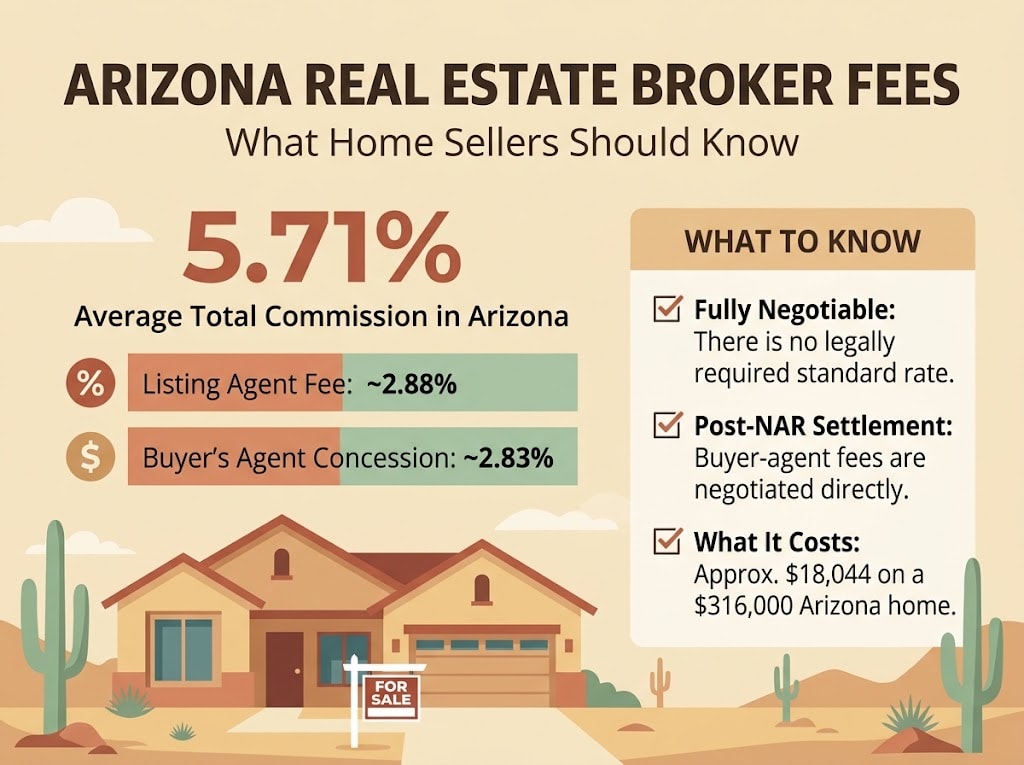
| Broker / Listing Fees | 1% to 6% | Varies dramatically based on whether you use full-service, flat-fee MLS, or an auction model. |
| Buyer Concessions (Rate Buydowns) | 1% to 3% | Offering seller-paid 2-1 interest rate buydowns is currently the #1 tool to protect your sales price against rate-sensitive buyers. |
| Title Insurance & Escrow Fees | 0.5% to 1% | Split between buyer and seller depending on standard local/county custom. |
| Transfer Taxes & Recording Fees | 0.1% to 1.5% | Mandated by state, county, or municipality. |
| Prorated Property Taxes & HOA Dues | Prorated daily | Calculated up to the exact day of title transfer. |
Where flat-fee MLS changes the math: A traditional listing agent charges 2.5%–3% on the listing side alone. At $500,000, that's $12,500–$15,000. Dash List's flat-fee MLS packages start at $59 upfront plus 0.5% at closing — saving Arizona sellers an average of $10,000–$12,000 on the listing commission alone. See our packages.
4. Structuring Concessions to Keep Your Price Intact
When a buyer hesitates because monthly payments feel high, a price reduction isn't always your most efficient move.
The Rate Buydown Advantage
A $10,000 seller credit toward a buyer's 2-1 temporary interest rate buydown drops their mortgage payment during years one and two far more than dropping the purchase price by $10,000. Here's why:
- A $10,000 price reduction on a $500,000 home reduces the monthly payment by roughly $55/month
- A $10,000 seller credit toward a 2-1 buydown reduces the buyer's payment by $400–$600/month in year one
The buyer gets dramatically more cash-flow relief — and you preserve your sale price.
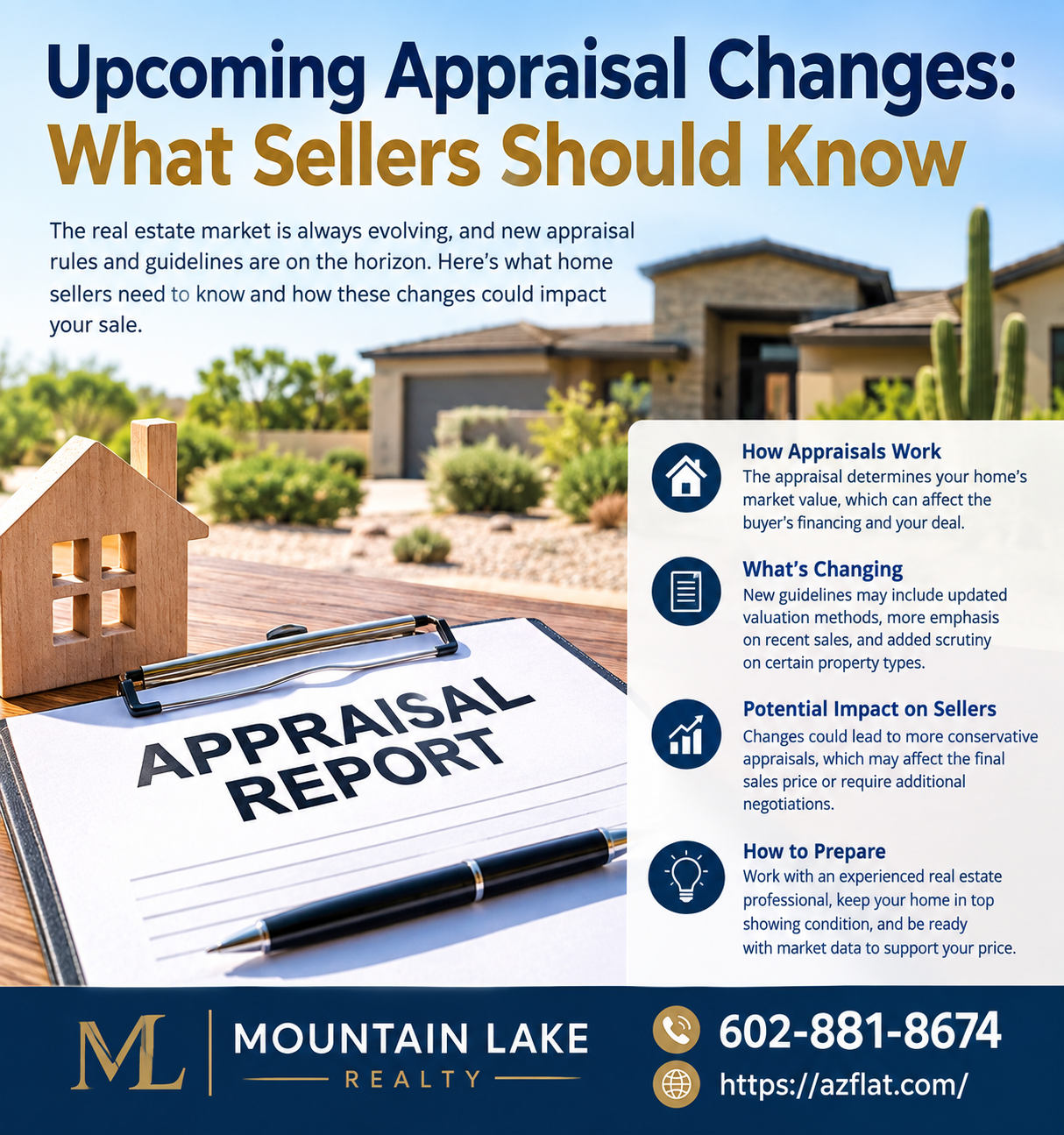
The Appraisal Buffer
By offering a credit rather than cutting the contract price, you preserve neighborhood comp values and give the buyer the exact cash-flow relief they need to sign. Future sellers in your neighborhood benefit too.
5. Pre-Listing Execution Timeline
Execution timing matters as much as the strategy itself. Here's the sequence that maximizes your launch-day impact:
Weeks 4–3 Before Launch Order pre-listing mechanical inspections (HVAC, roof, plumbing). Address deferred maintenance so it won't derail escrow during the buyer's inspection period. Surprises during inspection give buyers leverage — eliminate them proactively.
Week 2 Before Launch Declutter living spaces by 50%. Touch up baseboards, paint scuffs, and pressure-wash walkways. Deep clean every surface. This is also the time to complete any high-ROI cosmetic updates.
Week 1 Before Launch Professional high-resolution photography, floor plans, and digital virtual tours. Do not list without professional photos — this is non-negotiable in today's online-first market.
Launch Day: Thursday or Friday Hit the MLS right before the weekend traffic surge to maximize immediate private showings and initial open-house attendance. A Thursday or Friday launch gives your listing the full weekend of buyer activity before it ages even a single day.
Understanding your net proceeds: the math that matters
Most sellers focus on the sale price. The number that actually matters is your net proceeds — what you walk away with after all costs.
Here is a complete net proceeds calculation for a $450,000 Arizona home sale:
Gross sale price: $450,000
Selling costs:
- Flat fee listing ($59 + 0.5%): $2,309
- Buyer-agent compensation (2–2.5%): $9,000–$11,250
- Title and escrow fees: $1,500–$2,500
- HOA transfer fee (if applicable): $200–$500
- Home warranty (if offered): $400–$600
- Repairs from inspection: $0–$3,000 (varies)
- Staging (if used): $0–$2,000
Total estimated selling costs: $13,409–$20,159
Net proceeds before mortgage payoff: $429,841–$436,591
Subtract your mortgage payoff balance to get your actual equity.
This calculation illustrates why listing costs matter. A traditional 3% listing commission ($13,500) versus a flat fee ($2,309) is an $11,191 difference that goes directly to your net proceeds.
The inspection process: what to expect
In Arizona, buyers typically have a 10-day inspection period during which they can hire inspectors and request repairs or credits. Here is how to navigate it:
Consider a pre-listing inspection. A pre-listing inspection lets you identify issues before buyers find them. You can address them on your terms — at your chosen contractor's price — rather than under the pressure of a contract deadline. It also signals to buyers that you are a transparent seller.
Know what inspectors look for. Common inspection findings in Arizona homes include roof condition, HVAC age and function, plumbing leaks, electrical issues, pool equipment condition, and evidence of water intrusion. If your home has known issues, disclose them upfront.
Decide your repair strategy in advance. Before you list, decide which repairs you are willing to make and which you would prefer to address with a price adjustment or credit. Having a clear position before you receive a repair request makes negotiations faster and less stressful.
Understand the BINSR. The Buyer's Inspection Notice and Seller's Response (BINSR) is the Arizona form used to document inspection findings and the seller's response. Your broker will walk you through it, but understanding the process in advance helps you respond confidently.
Negotiating in today's Arizona market
In a balanced market, negotiation is more common than it was in 2021–2022. Here is how to negotiate effectively:
Know your bottom line before you receive an offer. What is the minimum price you will accept? What terms are non-negotiable? Having clear answers to these questions before you receive an offer helps you respond quickly and confidently.
Evaluate the whole offer, not just the price. A slightly lower offer with a cash buyer, no inspection contingency, and a flexible closing date may be worth more than a higher offer with a weak pre-approval and a long list of contingencies.
Counter strategically. If an offer is close but not quite right, a counter-offer is often more productive than a rejection. Counter on the specific terms that matter most to you — price, closing date, concessions — and leave room for the buyer to respond.
Understand concession requests. Buyers in today's market often ask for closing cost contributions or rate buydowns. A $5,000–$10,000 concession may be more effective than a price reduction of the same amount, because it helps the buyer with their immediate cash needs without necessarily reducing your net proceeds by the same amount.
Closing: what happens at the end
Arizona uses escrow companies (not attorneys) to handle the closing process. Here is what to expect:
Title search and insurance. The escrow company conducts a title search to confirm that you have clear ownership and that there are no liens or encumbrances. Title insurance protects the buyer (and you) against future title claims.
Escrow timeline. A typical Arizona closing takes 30–45 days from contract to close. Cash transactions can close faster — sometimes in 10–14 days.
Final walkthrough. Buyers typically conduct a final walkthrough 24–48 hours before closing to confirm the home is in the agreed-upon condition.
Signing and funding. You will sign closing documents (often at the escrow office or via remote notary), and the escrow company will disburse funds once all conditions are met.
Possession. The contract specifies when the buyer takes possession — typically at closing or within a few days. If you need more time to move, negotiate a rent-back agreement upfront.
The Bottom Line for Arizona Sellers
The sellers who net the most in today's market aren't the ones who list at the highest price — they're the ones who execute a deliberate strategy from Day 1. Price tactically, prep strategically, understand your real costs, and time your launch for maximum exposure.
If you're ready to list, Dash List puts your home on the Arizona MLS for $59 upfront plus 0.5% at closing — with full broker support through closing. Get started here or schedule a free consultation.
Explore Topics
Written by
Thomas Mastromatto, Broker
Content creator and writer sharing insights and stories.